

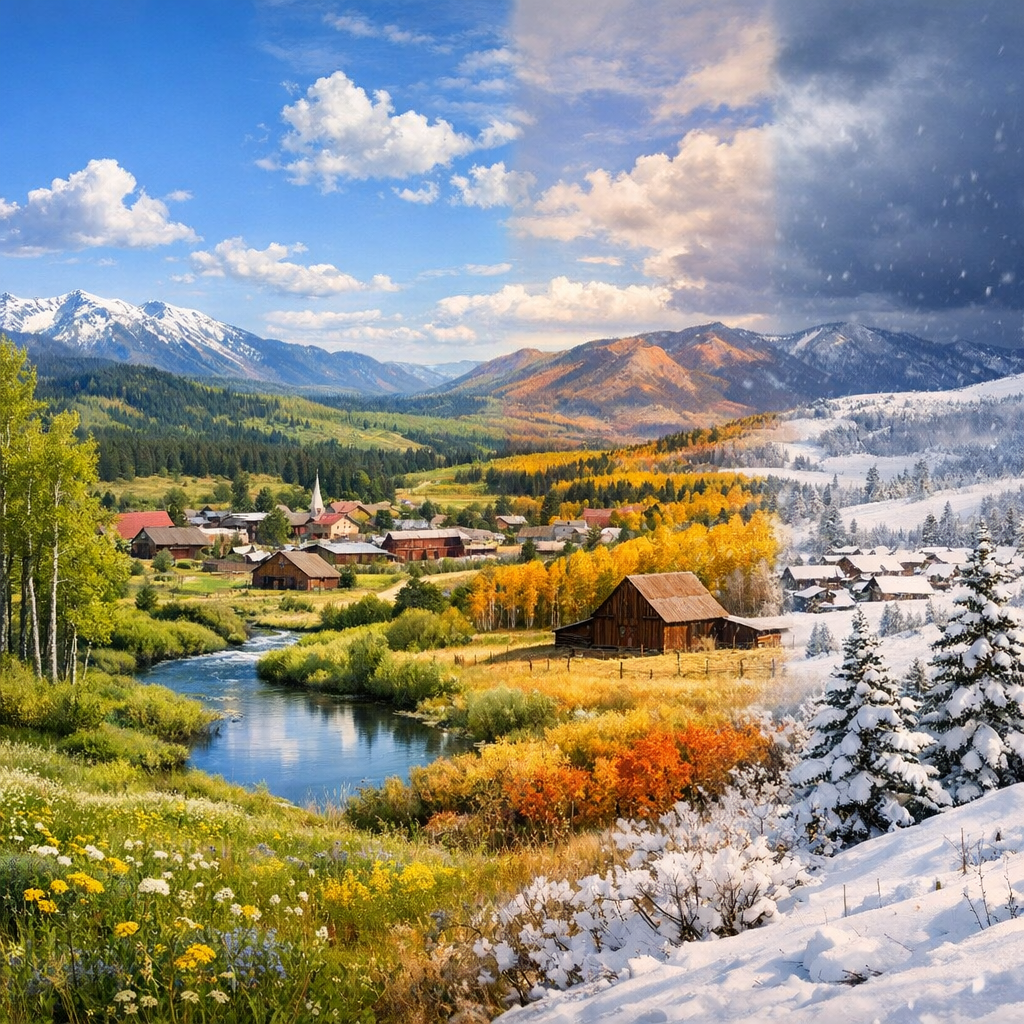
Yampa, Colorado, nestled in the heart of the Rocky Mountains, experiences a diverse climate influenced by its elevation and geographical features. Understanding these patterns is essential for residents and visitors alike.
Seasonal Overview
Winter
Winters in Yampa are characterized by cold temperatures and substantial snowfall. Average temperatures hover around 22.7°F (-5°C), with January highs reaching 35°F (2°C) and lows dipping to 9°F (-13°C). Snowfall is abundant, contributing to the region’s winter sports and water resources.
Spring and Fall
These transitional seasons bring moderate temperatures and variable weather. Spring averages around 43.1°F (6°C), while fall sees similar conditions. These periods are marked by rapid changes, with occasional late snowfalls in spring and early frosts in fall.
Summer
Summers are warm and relatively dry, with average temperatures around 66.5°F (19°C). July, the warmest month, typically sees highs of 83°F (28°C) and lows of 49°F (9°C). Precipitation is lower during this season, leading to drier conditions.
Environmental Considerations
Yampa’s climate has a profound impact on its environment. The Yampa River, one of the last free-flowing rivers in the Colorado River system, relies on seasonal snowmelt to maintain its flow. This natural hydrology supports diverse ecosystems and local agriculture. However, changing climate patterns have led to concerns about reduced snowpack and earlier melt times, potentially affecting water availability and river health.
Additionally, the region’s susceptibility to temperature inversions during winter can lead to air quality issues, as cold air traps pollutants close to the ground. This phenomenon underscores the importance of monitoring and managing environmental health in the community.
Staying Informed
Given the variability and potential for rapid weather changes, staying informed is crucial. Local resources, including the National Weather Service and community bulletins, provide up-to-date information on weather conditions and advisories. By understanding and respecting Yampa’s unique climate, residents and visitors can better prepare for and appreciate the natural beauty and challenges of the region.